
Best GPS Tracker for Rural Areas UK (2026 Guide)
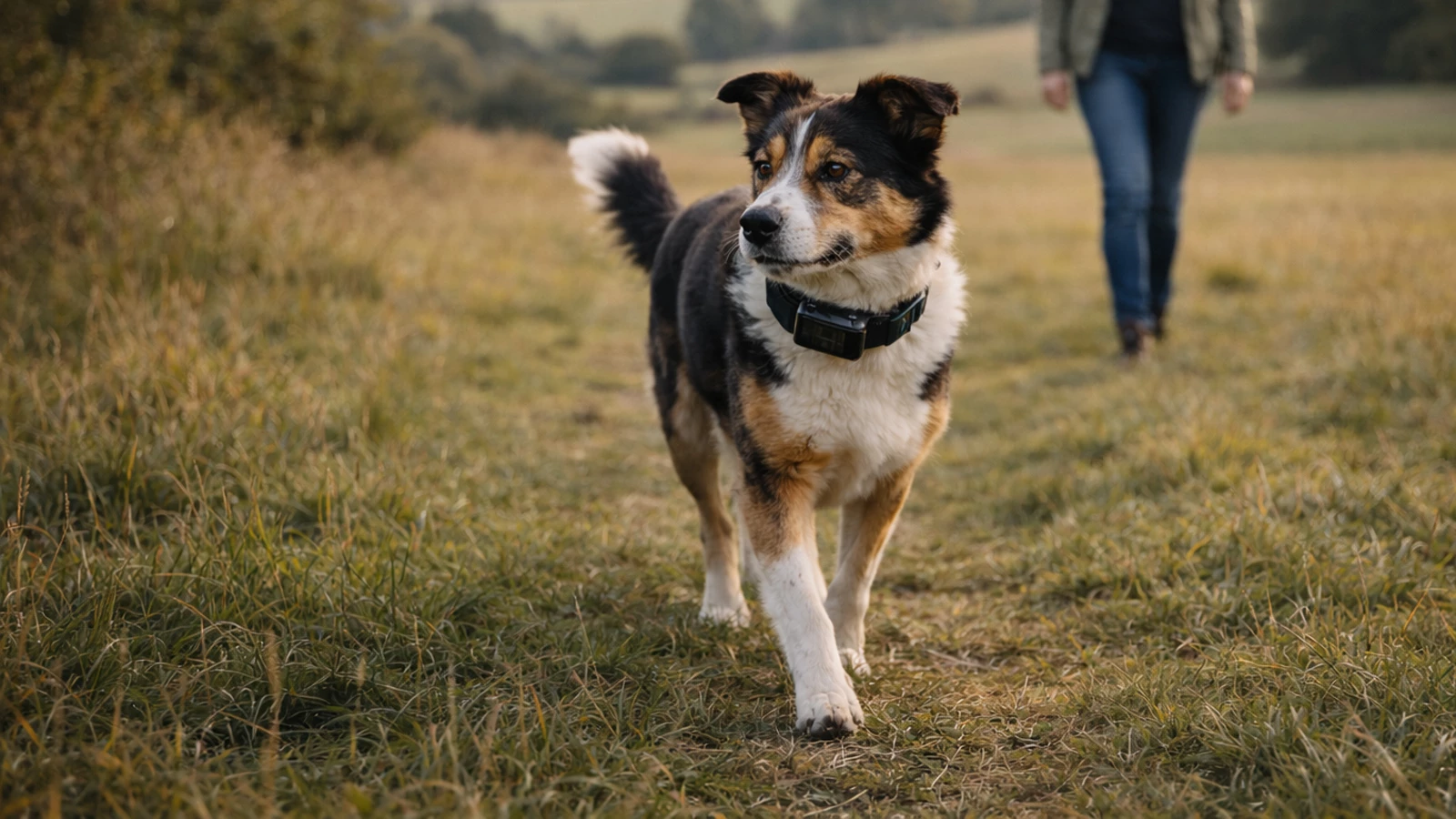
Choosing a GPS tracker for rural dog walking is very different from choosing one for use in towns or cities. Signal strength, terrain and distance all play a bigger role — and the wrong choice can leave you with unreliable tracking exactly when you need it most.
In the UK, many dog owners walk in open countryside, farmland, woodland and coastal paths. These environments are ideal for dogs, but they are also where tracking becomes more challenging. If your dog runs off in a city park, you are likely to have strong signal and consistent updates. If the same thing happens on moorland or in woodland, the conditions are less predictable.
This guide breaks down what actually matters for rural tracking, which types of devices perform best, and how to choose a GPS tracker that works in real-world countryside conditions — not just in ideal scenarios.
Short Answer: What Is the Best GPS Tracker for Rural Areas?
The best GPS tracker for rural areas in the UK is one that prioritises reliable network coverage, consistent location updates and strong real-world performance over extra features.
In most cases, this means choosing a well-established GPS tracker with proven UK network support rather than focusing on advanced features that add little practical value in weak signal environments.
If you want to compare the most reliable options currently available, start here: Best Dog GPS Trackers UK.
How GPS Trackers Work in Rural Environments
To understand why some trackers perform better than others in rural areas, you need to understand how they actually work.
A GPS tracker does two main jobs. First, it uses satellites to determine location. Second, it uses a mobile network to send that location data to your phone.
In rural environments, the first part usually works well. Open landscapes often mean fewer physical obstructions, so satellite positioning can be accurate. The problem is the second part — transmitting that data through a mobile network.
- GPS positioning is often strong in open countryside
- Mobile signal can be inconsistent or weak
- Updates may be delayed rather than completely lost
- Performance varies depending on terrain and coverage
This is why understanding signal limitations is critical. If you have not already, it is worth reading: Do Dog GPS Trackers Work Without Signal?
What Actually Matters for Rural Tracking
Many buyers focus on features such as activity tracking, app design or extra sensors. In rural use, these matter far less than core reliability.
Network Coverage
The single most important factor is how well the tracker connects to UK mobile networks. A device that works across multiple networks or has strong UK compatibility will outperform one that relies on weaker coverage.
Update Consistency
In rural areas, you are less concerned with perfect real-time tracking and more concerned with consistent updates. Even slightly delayed tracking can still give you direction and movement, which is what matters in a search situation.
Battery Life
Longer battery life becomes more important outdoors. A tracker that runs flat during a long countryside walk is of little use, regardless of its features.
Durability
Rural environments mean mud, water, uneven terrain and longer periods outdoors. A tracker needs to handle that consistently.
Free Dog Safety Checklist
Most owners only think about this after something goes wrong. Prepare properly before it does.
Get the Free ChecklistBest GPS Trackers for Rural Areas (UK Picks)
If you are choosing based on rural performance, these types of trackers stand out:
Tractive GPS Tracker — Best Overall for Rural Use
Tractive is widely used across the UK and performs well because of its network coverage and consistent tracking updates. It is not the most advanced device on paper, but it gets the fundamentals right.
- Strong UK network compatibility
- Reliable app performance
- Good balance between price and reliability
Pawfit 3 — Best for Durability and Battery
Pawfit is a solid choice for more demanding outdoor use. It offers better battery performance and a more rugged build, making it suitable for longer rural walks.
- Longer battery life
- More robust construction
- Better suited to active dogs
Weenect — Budget Option for Rural Areas
Weenect can work as an entry-level option, but performance in weaker signal areas may not match higher-end devices. It is best suited to lighter use rather than demanding environments.
- Lower upfront cost
- Basic tracking functionality
- Less refined in difficult conditions
→ See full comparison of all trackers
Real-World Countryside Example
Imagine walking your dog across open farmland. The dog picks up a scent and runs beyond visible range within seconds.
Without a tracker, you are relying entirely on instinct. You may guess the wrong direction. You may search in circles. You may lose valuable time.
With a GPS tracker, even if updates are slightly delayed, you can see the last known position and general direction of travel. That alone can change how you respond.
Instead of guessing, you follow. Instead of hoping, you act on information.
That difference is what matters in rural environments — not perfect tracking, but useful tracking.
Signal Limitations Explained Clearly
One of the biggest misunderstandings is expecting a tracker to function perfectly without signal.
In reality:
- No signal = no live updates
- Weak signal = slower or delayed updates
- Returning signal = tracking resumes
The key is that most rural environments are not “no signal” all the time. They are “variable signal”. A good tracker handles that variation better than a poor one.
Which Tracker Should You Choose?
The right choice depends on how and where you walk your dog.
- If you walk in mixed areas: choose a reliable all-round tracker
- If you walk in remote countryside: prioritise coverage and battery
- If your dog runs off frequently: prioritise update reliability
- If your dog is small: prioritise weight and fit first
Common Mistakes to Avoid
- Choosing based on features instead of reliability
- Ignoring UK network compatibility
- Expecting perfect tracking in all conditions
- Buying the cheapest option for demanding use
Frequently Asked Questions
Do GPS trackers work in the countryside?
Yes, but performance depends on network coverage. Most will still provide useful tracking, even if updates are slightly delayed.
Are rural areas bad for GPS tracking?
Not necessarily. GPS positioning is often strong, but mobile signal can vary.
What is the biggest limitation in rural tracking?
Mobile signal strength is the main limitation, not GPS accuracy.
Do I need a more expensive tracker for rural use?
Not always more expensive, but you should prioritise reliability over features.
Can a tracker still help if signal drops?
Yes. Last known location and delayed updates can still be extremely useful.
Final Recommendation
The best GPS tracker for rural areas is not the one with the most features — it is the one that performs consistently when conditions are less than ideal.
Choose a tracker with strong UK network support, reliable updates and proven real-world performance.
→ Compare the best GPS trackers in the UK
And if you want to reduce the risk altogether: